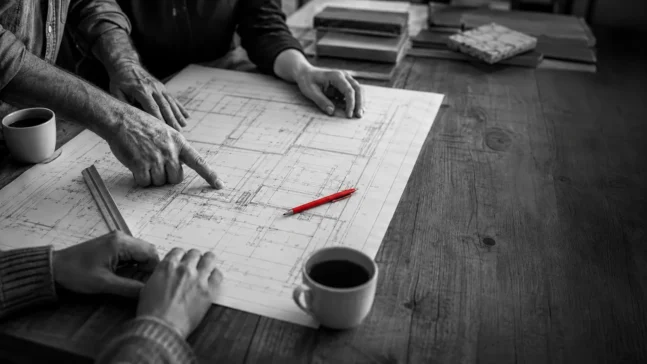
Most projects that blow out on budget do so because the builder was brought in too late. The designs are done. The client has their heart set on everything they’ve seen on Pinterest. The architect has drawn it up beautifully. And then the builder gets handed the plans and everyone finds out it costs twice what the client expected.
That’s price shock. And it’s the number one project killer in residential construction.
Value Management exists to prevent it. Completely.
What Is Value Management?
Value Management is a proactive process that brings the builder into the design phase of a project, long before final plans and budgets are locked in. It’s part of Early Builder Involvement (EBI), known in commercial and government projects as Early Contractor Involvement, and it changes the entire dynamic between builder, architect, and client.
Traditionally, the builder only sees plans after they’re complete. By that stage, the designs often don’t align with the client’s budget. That leads to price shock, redesigns, delays, and strained relationships between everyone involved.
With Value Management, the builder works collaboratively with the client and architect from the very start. Realistic budgets from day one. Designs that align with cost expectations. No surprises when the tender is submitted. A smoother process for everyone.
The 3 Steps
Stage 1: Initial Concept and Needs Analysis. Before committing to anything, you need to qualify the client and the project. Not every job is worth your time and not every client is a good fit. Review the concept design or SketchUp model. Do a Quick Building Estimate for a reality check. If it’s a $3M to $5M build, is the budget even close? Price your fee for this stage, this isn’t free advice. And know your exit. If the project is clearly unrealistic, refer it on. Protect your reputation and your brand.
Stage 2: Collaborative Refinement and Design Review. If the project is viable, this is where you add the most value. Run two to three structured meetings with the architect and engineer to explore buildability, costs, and risks upfront. Start with the big-ticket items first, structure, engineering, architectural elements, site constraints. Interiors come last. If the bones of the project aren’t right, the finishes won’t matter. By the end of this stage, you’ve locked in a realistic, buildable design that aligns with the client’s budget and vision.
Stage 3: Final Tender and Pre-Construction Lockdown. Everything gets finalised and locked in. All client selections signed off. A fully detailed tender produced. The builder, architect, and client all on the same page before the shovel hits the ground. No decisions means no build. Everything finalised before starting. Do this right and the actual build process is smooth sailing. No surprises, no budget shocks, no messy variations.
The Numbers
For residential clients using Value Management with Early Builder Involvement, reported savings typically range from 5 to 10% in project costs and 8 to 15% in delivery time. On a million-dollar residential project, that’s $50,000 to $100,000 in savings and 4 to 8 weeks off the timeline.
Those numbers get the client’s attention. But here’s what matters more for you as the builder: Value Management positions you as the trusted advisor, not the price-taker. You’re shaping the project, not just quoting it. And that means you’re leading the process, protecting your margins, and building with a scope that’s been properly defined from day one.
Why This Is the Future
The builders who are winning right now, the ones attracting AAA-grade, blue chip clients and building at healthy margins, are all doing some version of this. They’re getting involved early. They’re charging for their pre-construction expertise. They’re collaborating with architects instead of fighting with them.
The old model, wait for plans, price the job, hope for the best, doesn’t work anymore. It produces price shock for clients, margin erosion for builders, and damaged relationships all round.
Value Management flips the script. You’re not just here to price the job. You’re here to ensure it can actually be built within budget.
I’ve seen the worst price shock case you can imagine: a client with a $2 million budget, a quantity surveyor report at $1.7 million, a Quick Building Estimate at $5 to $6 million, and a reality probably north of $7 million. Client devastated. Project delayed six months for redesign. Builder-architect relationship destroyed. Every bit of that was preventable with early involvement.
Common Questions
What is value management in residential building?
A structured process that brings the builder into the design phase, tests the brief against a real budget, and gives the client honest options before the plans are locked in. It prevents price shock rather than discovering it at tender.
When does the builder get involved?
During design, not after it. Traditionally the builder only sees plans once they are complete, which is exactly when price shock happens. Early Builder Involvement puts the builder alongside the client and architect from the start.
Do builders charge for value management?
Yes, and they should. It is a defined preconstruction service with real deliverables, not free advice given in the hope of winning a tender.
What does it save?
Reported savings for residential clients typically range from 5 to 10 per cent in project costs and 8 to 15 per cent in delivery time. On a million-dollar build that is roughly $50,000 to $100,000 and 4 to 8 weeks.
If you want to learn how to implement Value Management in your business, qualify better clients, and position yourself as a premium builder, book a free strategy session. This is one of the most powerful shifts you can make.
Kurt Hegetschweiler is the founder of Builders Coach and author of the internationally best-selling Million Dollar Builder. He has coached thousands of residential builders since 2004.